The divided self of the perpetrator
The Zone of InterestThe divided self of the perpetrator is the narrator’s account of an identity split produced by life in the camp and altered, rather than healed, after the war. In the camp he experiences himself as doubled: at once the person acting and a further self who seems not to be that person. In postwar life, the division becomes a sense of being halved. The novel connects this unsettled selfhood to a wider claim: under National Socialism, people were exposed to themselves through what they did, suffered, witnessed, or resisted.
The Camp Double
The narrator describes his camp self as doubled, as though the person he is and another self existed together without becoming one. The formulation does not present the second self as a separate character or offer a clear psychological explanation. Instead, it registers an inability to make the camp self fully coincide with an ordinary, singular identity. The division belongs to the narrator’s experience as a perpetrator, but the novel does not treat it as an excuse or as a release from responsibility.
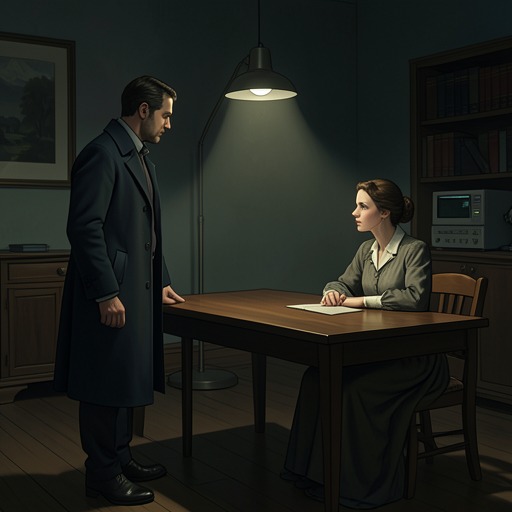
An earlier reflection gives this division a more intimate and troubling shape. Considering Alisz Seisser, the narrator recognizes that he wanted to bind her to him for insurance; looking back, he also describes wanting her to accompany him out of the light, into darkness. The movement between practical self-protection and a more disturbing desire makes the divided self visible as a conflict within the narrator’s own account of his motives. The darkness is not simply an outside force: it is also a direction in which he recognizes himself as wanting to move.
From Doubling to Halving
The narrator contrasts his camp experience with the years after the war. In the camp he felt doubled; afterward, he felt halved. The change in image matters: the postwar self is not described as newly whole, or as the successful reconciliation of two selves, but as diminished and incomplete. Although Germans were expected to become reformed people, the narrator says he could not construct a self-sufficient inner life. He refused to relieve that failure by joining anything, yet looking within brought him only an image of solitude.
That emptiness also shapes how he remembers Hannah Doll. He recalls the pleasure of her stance, the way she held a glass, spoke, and crossed a room, but recognizes that these encounters took place amid the misery of the camp. His postwar sense is not that their story was tragically left unfinished; it is that the story had scarcely begun. The memory therefore sharpens the difference between the vividness of remembered moments and the absence of a livable inner narrative after the camp.
The Mirror and the Zone of Interest
The novel widens the narrator’s private fracture into a claim about self-discovery under National Socialism. Looking in the mirror meant seeing one’s soul and finding out who one was. The claim applies most emphatically to victims, including those who survived long enough to confront their reflection, but it also encompasses perpetrators, collaborators, witnesses, conspirators, martyrs, and minor obstructors. The narrator places himself and Hannah Doll among those minor obstructors: neither stands outside the historical ordeal, though their positions within it differ profoundly from those of its victims.
The concluding link between the mirror and the zone of interest gives the concept its broader force. The zone is not only a place in which identities are divided; it is the setting in which people are revealed by their relation to violence and power. The narrator’s account does not turn that revelation into moral equivalence. Instead, it makes self-knowledge inseparable from the unequal positions people occupied and from what they did, endured, witnessed, or resisted.